
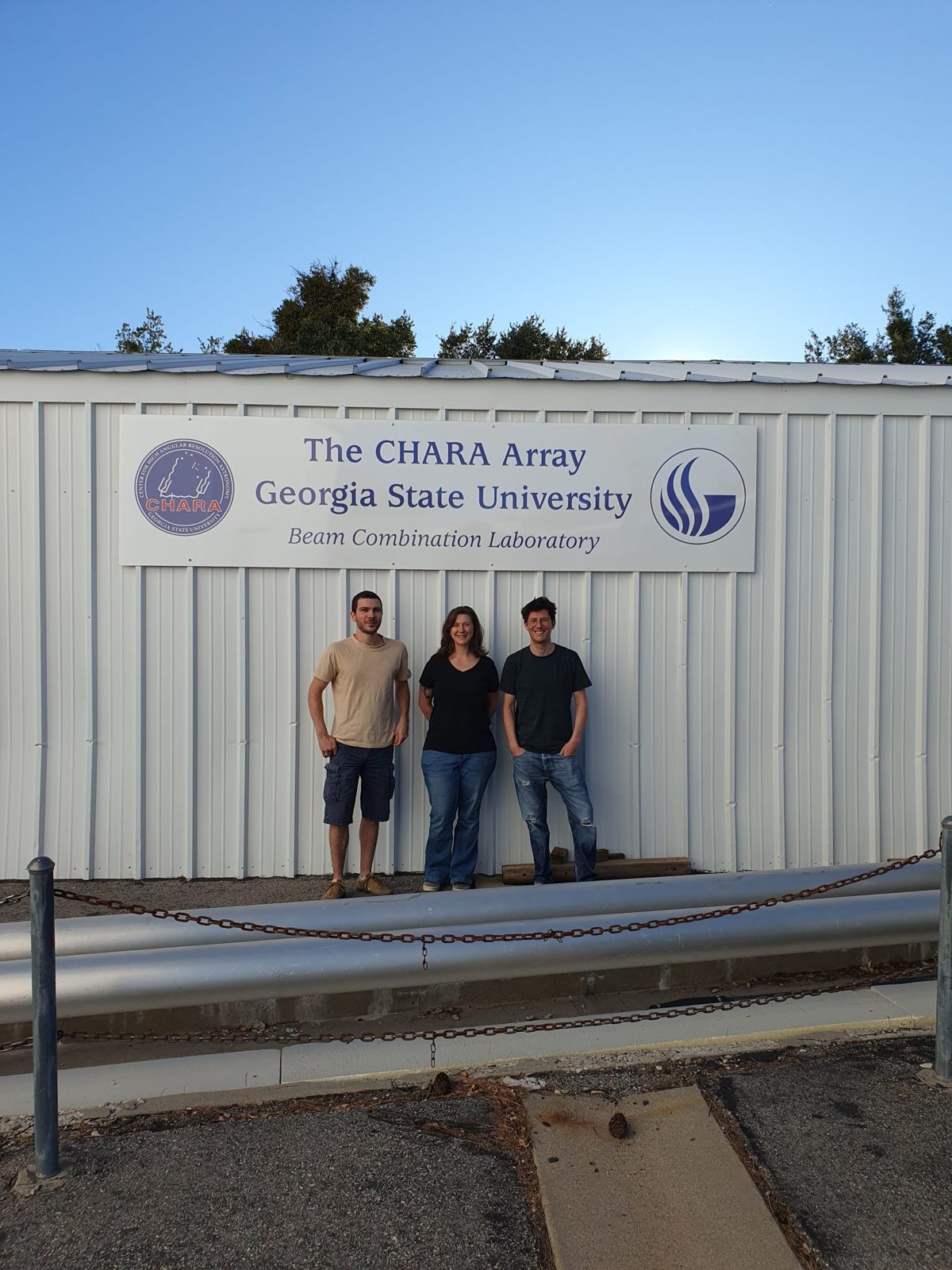
A tiny glass chip developed by researchers at Heriot-Watt University has linked two telescopes together to enable them to act as a single powerful instrument, Edinburgh Chamber of Commerce reported.
The chip guides light through thin glass channels in the manner of integrated circuits guiding electrons, and has been used for the first time in on-sky observations at the CHARA Array in California, which consists of six telescopes that can be linked to study celestial objects in detail, according to Edinburgh Chamber of Commerce. The results show the technology, small enough to fit in the palm of a hand, can perform a task that has traditionally required larger and more complex optical systems, the body said.
The chip was developed at Heriot-Watt University’s Institute of Photonics and Quantum Sciences by Professor Robert Thomson and Dr Aurélien Benoît, as part of an international project also involving researchers in Germany and the United States, Edinburgh Chamber of Commerce said. The chip sits inside an instrument called CHARIOT, which during observing campaigns in 2024 and 2025 combined light from CHARA Array telescopes and recorded signals from stars fainter than those reached by the system it replaced, according to the body.
Professor Robert Thomson said: “This is a significant milestone for a research programme that began more than 15 years ago.” He added that traditionally combining light from multiple telescopes requires bulky instruments with complex mirrors and lenses, but the team had shown much of that work could instead be carried out by a glass chip only a couple of centimetres in size.
Dr Aline Dinkelaker, lead author of the study from the Leibniz Institute for Astrophysics Potsdam, said: “Demonstrating this technology under real observing conditions is an important step forward.” She said the technology could help astronomers study planetary systems around other stars in greater detail and support ambitious goals in modern astronomy.
The research has been published in the Monthly Notices of the Royal Astronomical Society, Edinburgh Chamber of Commerce said, adding that the work forms part of the growing field of astrophotonics.